Have yellow or brown stains started making your smile look darker, even though you brush every day? Smoking can leave persistent discoloration that regular toothpaste may not fully remove. Tar and nicotine can collect on enamel, around the gumline, and between teeth over time. This often leaves patients wondering whether their teeth can still become noticeably brighter.
At Dr. Bob’s Dental Care, Dr. Bob and our dental team help patients understand the cause of their discoloration before recommending cosmetic treatment. For patients considering teeth whitening in Amherst, the first step is to determine whether the discoloration is primarily on the enamel surface or involves deeper tooth structure. This guide explains why tobacco stains develop, how professional teeth whitening works, when a dental cleaning may help first, and what you can realistically expect from treatment.
Why Does Smoking Cause Yellow or Brown Stains on Teeth?
Cigarette smoke exposes teeth to substances that can discolor enamel. Nicotine itself is colorless, but it can turn yellow upon exposure to oxygen. Tar can also leave dark deposits on tooth surfaces.
With repeated smoking, these pigments may become increasingly noticeable. They often collect near the gumline, between teeth, and in areas where plaque or tartar is present.
Dentists generally evaluate two forms of tooth discoloration:
- Extrinsic stains: Discoloration located primarily on the enamel surface.
- Intrinsic discoloration: Color changes located within the tooth structure.
This distinction matters because the right treatment depends on where the discoloration is located. Surface buildup may respond well to a dental cleaning and polishing. Deeper discoloration may require a bleaching treatment to change the shade of natural enamel.
Can Professional Teeth Whitening Remove Tobacco Stains?
Yes, whitening can often reduce yellow or brown tobacco-related discoloration on natural teeth. However, the degree of improvement depends on the type, depth, and duration of the stain.
Professional teeth whitening uses peroxide-based bleaching agents that penetrate enamel and break down stain molecules. Unlike brushing, which primarily cleans tooth surfaces, bleaching can address discoloration within the enamel.
Long-standing smoking stains may need a different approach than mild coffee or food stains. Some patients may also have several causes of discoloration at the same time.
For example, a patient may arrive concerned about tobacco staining but also have tartar along the gumline and naturally darker tooth color. In that situation, simply applying whitening gel may not address every cause. A dental evaluation helps separate these issues before treatment begins.
Why Might You Need a Dental Cleaning Before Whitening?
A cleaning may be recommended first when plaque, tartar, or heavy surface deposits cover the teeth. Removing these deposits gives the dentist a clearer view of your natural tooth shade and can help create a more even foundation for whitening.
Daily brushing cannot remove hardened tartar. Dark pigments can attach to these deposits and make teeth appear more discolored.
During an evaluation for teeth whitening in Amherst, your dentist may therefore recommend dental cleaning before cosmetic treatment. This does not mean cleaning and bleaching perform the same job.
Cleaning removes plaque, tartar, and some external stains. Professional teeth whitening changes the shade of natural tooth structure using a bleaching agent.
Separating these two steps can help establish more realistic expectations about what each procedure can accomplish.
How Does Professional Whitening Work on Stained Teeth?
A dentist first evaluates the teeth and gums to determine whether bleaching is appropriate. Existing cavities, gum irritation, enamel defects, sensitivity, and dental restorations can influence the treatment plan.
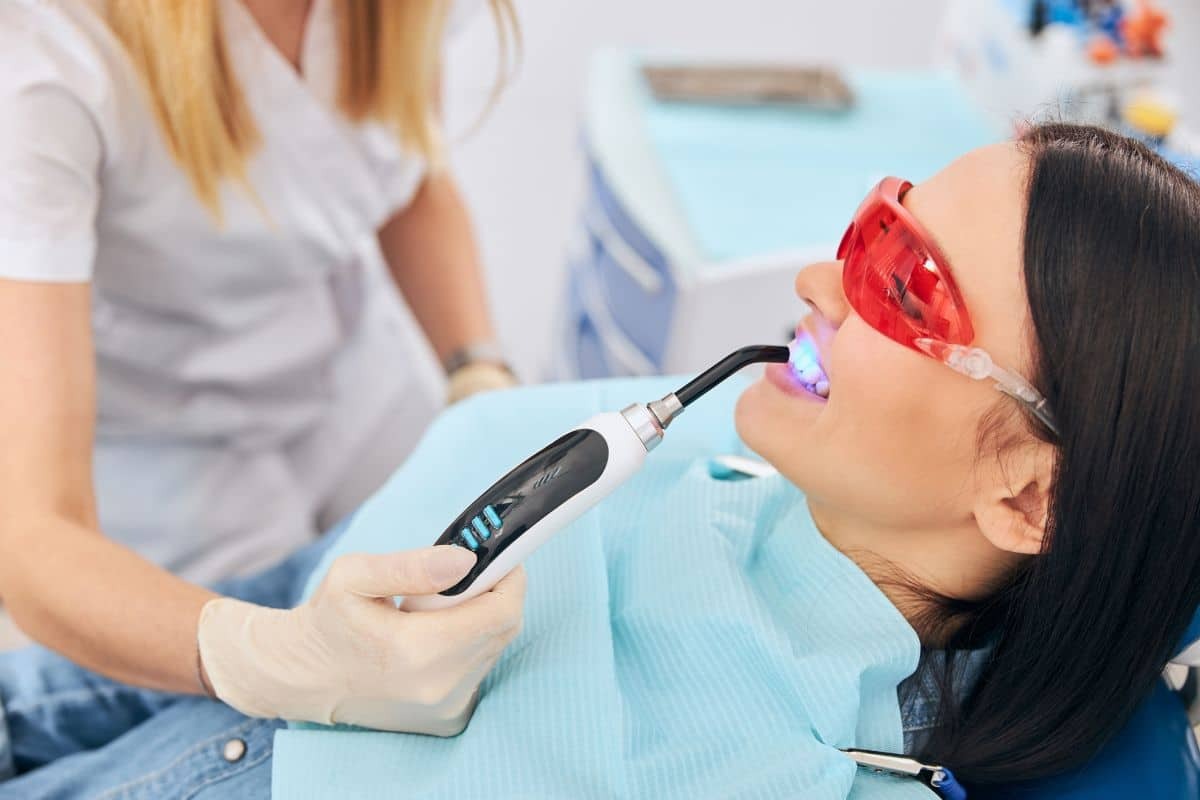
With professional teeth whitening, a controlled whitening agent is placed on the natural teeth. The bleaching ingredients penetrate enamel and chemically break down colored molecules responsible for discoloration. The process does not simply “scrub” stains away.
This distinction explains why professional bleaching can address discoloration that whitening toothpaste cannot reach. However, the response varies between patients. The amount of smoking, original enamel shade, stain depth, age, and other sources of discoloration can all influence the outcome.
Will Crowns, Fillings, Bonding, or Veneers Become Whiter?
No, dental bleaching changes the shade of natural tooth structure but does not whiten crowns, veneers, fillings, or bonding materials.
This is one of the most important issues to identify before treatment. A crown or filling that currently matches the surrounding teeth may appear darker once those natural teeth become brighter.
A cosmetic dentist in Amherst can examine visible restorations and discuss how they may affect the final appearance of your smile. If you have older restorations or significant tooth discoloration, contact us before using whitening products on your own.
A professional evaluation can also identify stains that may not respond predictably to bleaching. In certain situations, another cosmetic option may be more appropriate.
Can You Whiten Your Teeth If You Still Smoke?
Whitening may still brighten natural teeth, but continued tobacco exposure can cause new discoloration and shorten how long the brighter shade remains noticeable.
This is an important expectation for active smokers. Professional teeth whitening can treat existing discoloration, but it cannot prevent new pigments from reaching the enamel afterward.
Continued smoking may therefore increase the need for stain management and future touch-ups. Regular dental cleanings can also help control surface deposits.
Patients should discuss their current habits openly during their appointment. Dental care should focus on accurate clinical information rather than judgment. Knowing the frequency of tobacco exposure helps the dental team recommend a realistic whitening and maintenance plan.
Is Professional Whitening Better Than Whitening Toothpaste for Tobacco Stains?
Whitening toothpastes can help remove some superficial staining through polishing ingredients. They generally cannot change deeper tooth color in the same way peroxide-based bleaching can.
Drugstore strips may contain bleaching ingredients, but they do not include the same level of individualized dental evaluation. They may also produce uneven results when restorations, tartar, gum recession, or existing dental concerns are present.
For persistent smoking stains, professional teeth whitening offers another important advantage: your dentist can determine the type of discoloration you have before treatment begins.
This evaluation matters because not every dark area is a cosmetic stain. Tooth decay, old restorations, trauma, and other dental conditions can also alter a tooth’s appearance.
How Can You Maintain a Brighter Smile After Whitening?
Whitening is not permanent. Teeth remain exposed to pigments from tobacco, coffee, tea, red wine, and other strongly colored substances.
To help manage future discoloration:
- Brush twice daily with fluoride toothpaste.
- Floss or clean between teeth every day.
- Keep regular dental cleaning appointments.
- Limit frequent exposure to strongly pigmented drinks when possible.
- Follow your dentist’s whitening aftercare instructions.
- Ask before using abrasive DIY whitening products.
- Discuss appropriate touch-up care with your dentist.
Reducing or stopping smoking can also reduce repeated exposure to tobacco pigments. It has broader oral health benefits beyond tooth color.
When Should You See a Dentist About Tobacco-Stained Teeth?
Consider scheduling an evaluation when discoloration remains after regular brushing, stains continue to become darker, or home whitening has produced little change.
You should also seek an examination if one tooth suddenly becomes much darker than neighboring teeth. A single dark tooth can have causes unrelated to tobacco staining and may require a different treatment.
Schedule Your Teeth Whitening Consultation at Dr. Bob’s Dental Care
Persistent stains do not automatically mean your teeth cannot respond to whitening. The key is identifying whether the color comes from surface deposits, deeper enamel discoloration, restorations, or another dental issue.
At our practice, Dr. Bob and our team can evaluate your teeth, discuss realistic expectations, and determine whether professional teeth whitening is appropriate for your smile. If discoloration caused by smoking is affecting how you feel about your smile, visit our dental office to discuss your options.
Schedule an appointment to learn whether teeth whitening in Amherst can help you achieve a cleaner, brighter-looking smile while protecting your oral health.
Frequently Asked Questions
1. Can Years Of Cigarette Stains Be Removed From Teeth?
Long-term tobacco stains can often be reduced, but the extent of reduction depends on how deeply the discoloration has set. Surface deposits may first require cleaning and polishing. Deeper enamel discoloration may respond to professional teeth whitening. A dental examination is recommended before treatment because dark areas can also be due to restorations, decay, or other causes that bleaching will not correct.
2. Why Are My Teeth Still Yellow After Using Whitening Toothpaste?
Whitening toothpaste mainly helps polish away superficial stains. It cannot always reach pigments that have become incorporated deeper within the tooth structure. Tartar can also remain despite brushing and may hold dark deposits near the gumline. A dentist can determine whether you need a cleaning, bleaching treatment, or another approach based on the actual source of discoloration.
3. Should Teeth Be Professionally Cleaned Before They Are Whitened?
It depends on the condition of your teeth. When plaque, tartar, or substantial surface staining is present, a dentist may recommend cleaning first. Removing these deposits can reveal the underlying tooth shade and create a cleaner surface for treatment. Schedule a dental evaluation rather than assuming bleaching alone will address every visible stain.
4. Will Whitening Make All Of My Teeth Exactly The Same Shade?
Not necessarily. Natural teeth can respond differently depending on their starting shade, enamel structure, stain depth, and previous dental treatment. Crowns, veneers, bonding, and tooth-colored fillings will not bleach like natural enamel. A dental evaluation can identify these differences beforehand and help you understand what kind of cosmetic change may be realistic.
5. How Long Will Teeth Stay Brighter If Tobacco Use Continues?
There is no fixed timeline because staining habits, oral hygiene, diet, and individual enamel characteristics vary. Continued tobacco exposure can introduce new pigments after treatment and may make discoloration return sooner. Your dental team can recommend cleanings, home care, and appropriate touch-ups based on how quickly your teeth begin accumulating new stains.