Yes, Invisalign helps with TMJ.
At Dr. Bob’s Dental Care, Amherst, NY, we offer cutting-edge treatments to address various dental and health concerns, including TMJ disorders. One such option is Invisalign, a popular solution for aligning teeth. However, how does it relate to temporomandibular joint disease?
Let’s explore this and understand how Invisalign for TMJ might be a helpful solution for those suffering from jaw pain, clicking, and discomfort associated with TMJ syndrome.
What is TMJ Disorder?
It is a problem with the temporomandibular joint, which connects your jaw to the skull. It’s responsible for allowing your mouth to open and close, and it plays a key role in chewing and speaking. However, when this joint becomes misaligned or inflamed, it can cause a range of symptoms, including:
- Jaw pain
- Difficulty chewing or speaking
- Headaches
- Jaw clicking or popping
- Neck or shoulder pain
- Earaches or ringing in the ears
These symptoms, known as TMJ disorder symptoms, can be incredibly uncomfortable and impact daily life. While there are several treatment options, many individuals wonder whether Invisalign and TMJ could be an effective solution.
Can Invisalign Help TMJ?
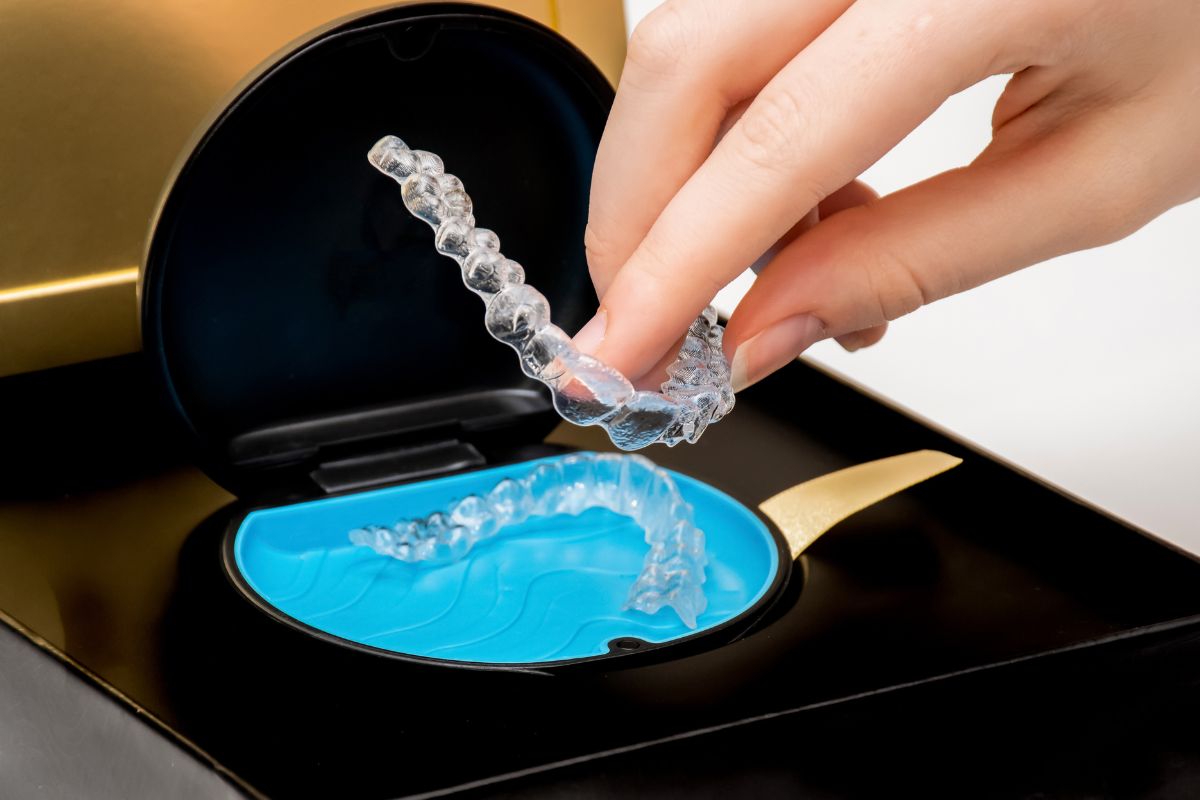
Invisalign treatment involves wearing clear, custom-made aligners that gradually shift your teeth into proper alignment. Though Invisalign is typically associated with improving the appearance of teeth, its benefits extend beyond just cosmetic changes.
For individuals with TMJ disorder, misalignment of teeth can often be a contributing factor. When teeth are not properly aligned, it can lead to improper jaw movement, strain on the jaw muscles, and ultimately contribute to TMJ syndrome. In some cases, Invisalign aligners for teeth can help address these misalignments, thereby alleviating some of the symptoms of this disorder.
By repositioning the teeth, Invisalign can reduce the strain on the jaw muscles and improve how the jaw functions. This can lead to less discomfort, fewer headaches, and reduced clicking or popping in the jaw. Essentially, Invisalign aligners might not only straighten your smile but also provide relief for TMJ.
How Invisalign Works for TMJ Disorders?
The clear, removable Invisalign aligners are designed to gradually shift your teeth into better alignment. For patients suffering from this jaw disorder, Invisalign can specifically target bite issues that may be exacerbating the condition. Here’s how:
- Aligns the teeth: Proper alignment of teeth ensures that your upper and lower teeth meet evenly when you bite, reducing the strain on the temporomandibular joint.
- Improves bite function: By correcting bite irregularities, Invisalign on teeth can help reduce unnecessary muscle tension in the jaw, which is a key factor in this issue.
- Reduces clenching and grinding: Misalignment can lead to teeth grinding or clenching, which often contributes to TMJ syndrome. Invisalign aligners can help by promoting a more natural bite and decreasing these habits.
- Removable for comfort: Unlike traditional braces, Invisalign aligners are removable, which allows you to maintain comfort and hygiene while wearing them.
Is Invisalign the Right Option for TMJ?
Invisalign may be an effective treatment for this disorder caused by misaligned teeth, but it’s not a one-size-fits-all solution. For some, more invasive treatments such as splints or even surgery may be necessary. It’s important to consult with a skilled dentist to determine if Invisalign treatment is right for your unique situation.
If you are dealing with TMJ syndrome symptoms like jaw pain, headaches, or discomfort, scheduling a consultation at Dr. Bob’s Dental Care can help you find out your options. Our team is dedicated to helping you find the most suitable treatment for your needs.
Common TMJ Syndrome Treatment Options
At Dr. Bob’s Dental Care, we offer a range of treatment options for TMJ disorder, tailored to your needs. Along with Invisalign for TMJ, other treatments may include:
- Mouthguards: Custom-made to protect your teeth from grinding and clenching.
- Physical therapy: Exercises to strengthen and relax jaw muscles.
- Medications: Pain relief and muscle relaxants to reduce discomfort.
- Surgery: In severe cases, surgical intervention may be required.
Our team will assess your symptoms and recommend the most appropriate solution for your comfort and long-term oral health.
Get Relief from TMJ with Invisalign
Yes, Invisalign can help TMJ. If you are struggling with this disorder and are looking for a non-invasive, effective treatment, Invisalign aligners may be the answer. At Dr. Bob’s Dental Care, Amherst, NY, we specialize in Invisalign treatment and can help determine if this treatment is suitable for alleviating your TMJ symptoms.
Don’t let TMJ syndrome control your life. Schedule an appointment today to find out how these clear aligners can help. Our team is here to provide you with personalized care and a treatment plan that suits your needs. Contact us now and take the first step toward a more comfortable, pain-free smile!
FAQs
Q. Can Invisalign help with TMJ disorder?
A: Yes, Invisalign can help alleviate TMJ symptoms by aligning teeth and improving bite function, which reduces strain on the jaw. This can lead to less jaw pain and discomfort over time.
Q. How long does it take for Invisalign to help TMJ?
A: The length of treatment varies, but most patients start noticing improvements in their TMJ symptoms after a few months. Full results typically take 12-18 months, depending on the severity of the issue.
Q. Does Invisalign work for jaw pain caused by TMJ?
A: Invisalign can help reduce jaw pain associated with TMJ by improving tooth alignment, which minimizes the strain on jaw muscles. Aligning properly enhances jaw function and helps minimize discomfort.
Q. Can Invisalign aligners be worn with TMJ pain?
A: Yes, Invisalign aligners are removable, so you can wear them even if you’re experiencing TMJ pain. They provide a comfortable option to align teeth without causing additional strain on your jaw.
Q. What are the other treatments for TMJ disorder besides Invisalign?
A: Besides Invisalign, treatments for TMJ include mouthguards, physical therapy, pain medications, and in severe cases, surgery. A consultation with a dentist can help determine the best approach for your symptoms.