A missing tooth can change more than your smile. It may affect how you chew, speak, and feel when you laugh or take photos. It can also allow nearby teeth to shift toward the open space over time. If you are considering dental implants in Amherst, it helps to understand how this option compares with a traditional bridge before making a decision.
At Dr. Bob’s Dental Care, our dentist helps patients consider the full picture, including their oral health, goals, timeline, and the condition of nearby teeth. The right tooth replacement should feel comfortable, support daily function, and fit your long-term dental needs.
Why Replacing a Missing Tooth Matters
Leaving a tooth gap untreated may create more challenges later. The teeth beside the space can move, the opposing tooth may grow farther into the gap, and chewing pressure may become uneven. Some people also avoid certain foods or feel self-conscious about speaking and smiling.
Replacing the tooth can help restore:
- More comfortable chewing
- Clearer speech
- A balanced bite
- A natural-looking smile
- Support for surrounding teeth
Two common fixed tooth replacement options are implant-supported crowns and dental bridges. Both can restore a visible gap, but they work in different ways.
What Are Dental Implants?
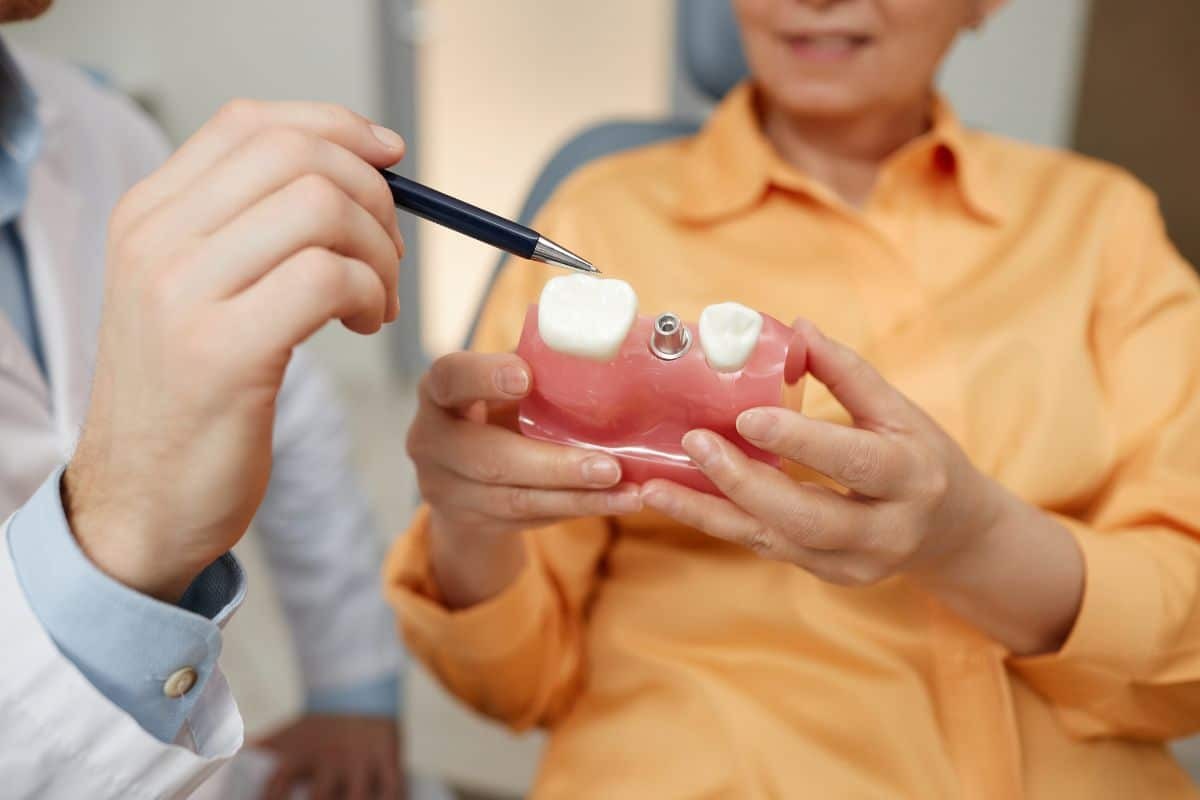
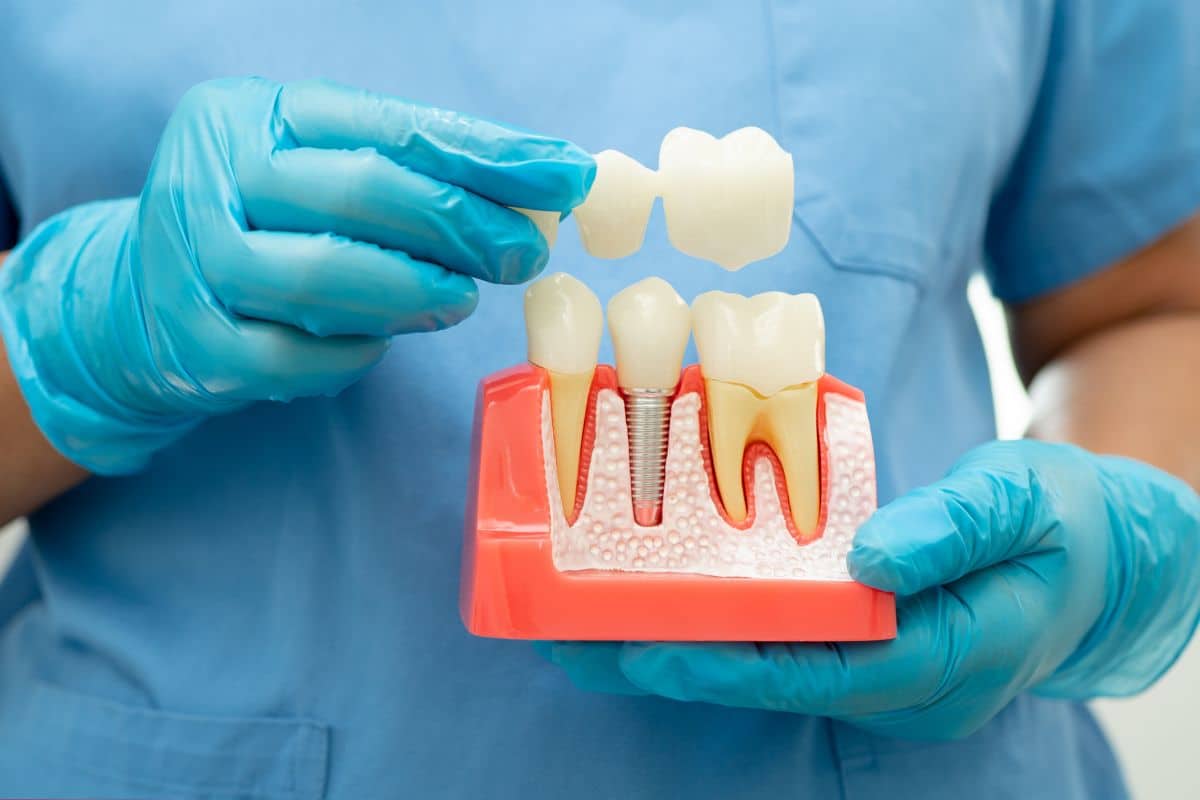
Dental implants are small posts placed in the jawbone to act like replacement tooth roots. After the area heals, a custom crown is attached to the post. This creates a stand-alone replacement tooth that does not rely on adjacent teeth for support.
A major advantage is that the post transfers chewing force into the jaw, which may help preserve bone in the area of the missing tooth. The process usually involves planning, placement, healing time, and placement of the final crown. The full timeline varies depending on bone health, healing progress, and whether additional care is needed first.
How Does a Dental Bridge Work?
A traditional bridge fills a gap with an artificial tooth, held in place by crowns on the adjacent teeth. Those neighboring teeth are shaped so the restoration can fit securely over them. A bridge can often be completed sooner than an implant-based treatment because it does not require surgical placement or a bone-healing period.
Dental bridges can be a practical choice when:
- The neighboring teeth already need crowns
- You want to replace a tooth without surgery
- Your health history makes surgery less suitable
- You need a shorter treatment timeline
However, a bridge does not replace the tooth root beneath the gumline. It also requires careful daily cleaning under the replacement tooth and around the supporting crowns.
Dental Implants vs. Bridges: Key Differences
Impact on Nearby Teeth
An implant-supported crown stands independently, so adjacent healthy teeth usually do not need to be reshaped. A traditional bridge relies on those teeth for support. If the neighboring teeth already have large fillings, cracks, or crowns, this may be less of a concern.
Jawbone Support
After tooth loss, the bone in that area may gradually shrink because it no longer receives chewing stimulation. Dental implants in Amherst can provide support within the jawbone, while a traditional bridge sits above the gumline.
Treatment Timeline
A bridge may take only a few appointments. Implant treatment commonly takes several months because healing and bone integration are essential parts of the process. A dentist can explain the expected schedule after reviewing your X-rays and oral health.
Daily Care
Both options require brushing, flossing, and regular exams. A bridge needs special flossing tools or an interdental brush to clean beneath the artificial tooth. An implant-supported crown is cleaned much like a natural tooth, though the gums around it still need close attention.
Long-Term Planning
Dental implants may offer a lasting solution for many patients when they are properly planned and maintained. A bridge can also serve well for years, but the supporting teeth remain part of the restoration and may need future treatment.
Who May Be a Candidate for an Implant?
A consultation is the only way to know whether this treatment fits your needs. Candidates often have healthy gums, enough jawbone for support, and a commitment to regular home care and dental visits. Smoking, uncontrolled health conditions, gum disease, or bone loss do not always rule out treatment, but they may affect the plan.
During an evaluation, your dentist may review:
- The location and number of missing teeth
- Gum health and bone levels
- Bite alignment
- The condition of nearby teeth
- Medical history and medications
- Your goals for appearance and function
If you have been living with a missing tooth, visit our dental practice in Amherst to discuss your options. Clear imaging and a complete exam can show whether an implant, bridge, or another restoration makes sense for your smile.
Why Many Patients Choose the Implant Route
For many people, dental implants offer the closest match to a natural tooth because they replace both the visible crown and the root structure below it. They can support confident chewing and help protect the jawbone around the missing tooth. They also avoid placing added stress on neighboring healthy teeth.
That said, an implant is not automatically the right answer for every patient. A bridge may be the more sensible choice when adjacent teeth need crowns, when timing is urgent, or when surgery is not advised. The goal is not to choose the same treatment for everyone. It is to choose the option that supports your oral health now and in the years ahead.
Restore Your Smile With a Plan That Fits Your Needs
A missing tooth does not have to limit how you eat, speak, or smile. Dr. Bob’s Dental Care can help you compare each option and understand what your treatment may involve. If you are considering dental implants in Amherst, book an appointment today to discuss a clear path toward restoring your smile.
Frequently Asked Questions
1. Is an implant more natural-looking than a bridge?
Both can be designed to blend with surrounding teeth. An implant-supported crown often looks and feels natural because it stands on its own rather than connecting to neighboring teeth. A consultation can help determine the right cosmetic approach.
2. Does getting an implant hurt?
Placement is performed with local anesthesia, so you should not feel pain during the procedure. Mild soreness afterward is common and can often be managed with the instructions and medications recommended by your dental team.
3. How long does implant treatment take?
The timeline varies by healing needs, bone support, and whether preparatory treatment is necessary. Some patients need several months before receiving the final crown, while others may have a different schedule based on their clinical needs.
4. Can a bridge be replaced with an implant later?
In many cases, yes. Your dentist will evaluate the health of the gums, bone, and nearby teeth first. If bone loss has occurred, additional treatment may be needed before placing an implant post.
5. How do I clean beneath a bridge?
Use floss threaders, bridge floss, or an interdental brush to clean beneath the artificial tooth. Daily cleaning is important because food debris and plaque can collect around the supporting teeth and gums.
6. What happens if I wait too long to replace a missing tooth?
Nearby teeth may shift, bite changes can occur, and bone in the gap may gradually reduce. An early evaluation gives your dentist more options and helps you make a decision before the problem becomes more complex.